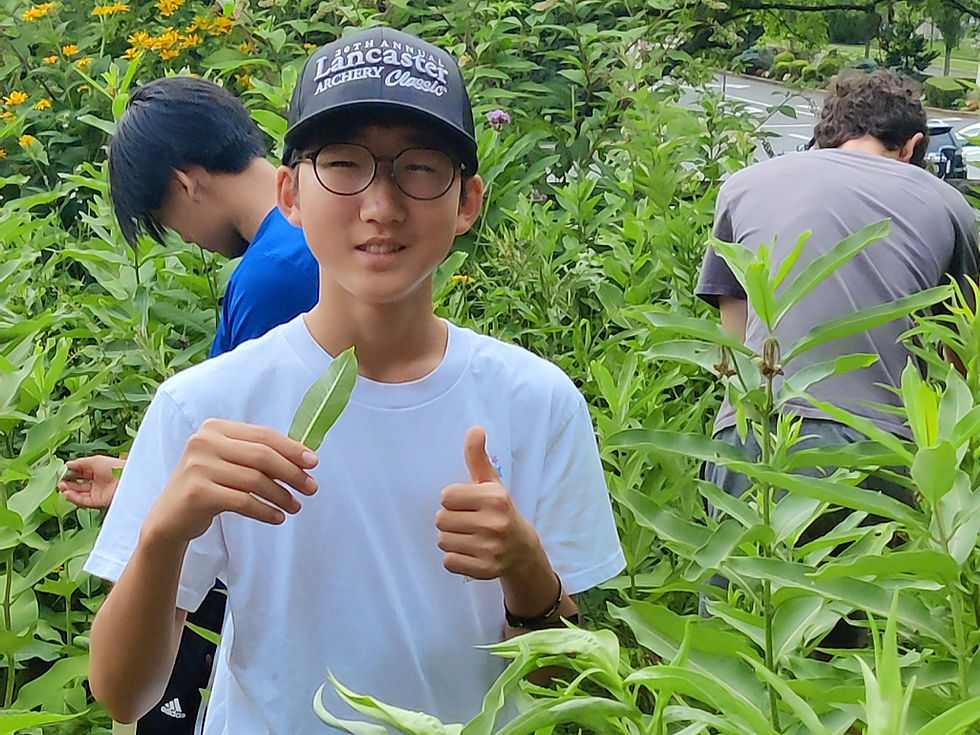
Growing Up with Caterpillars: Neil's Reflection
By Neil Marantz, RTR Reflection Runner-up & Great Neck South High School Freshman

The Raise, Tag, and Release (RTR) Summer Program taught me many things through the unique experience it provided, one of which being parenthood. Taking in the caterpillars, making sure they were constantly fed, making sure that their surroundings were clean and safe, even cleaning up their frass; I felt like a parent. Watching the caterpillars from their small, fearful youth into still chrysalides, before emerging as vivid butterflies taught me how what we consider “nature” is in fact not all that different from us. The caterpillars have large appetites, their milkweed feasts reminding me of how we are when faced with our favorite foods. Naturally the caterpillars produced much frass after eating, similar to our own behaviors (I won’t elaborate on this further.) And finally, after a long milkweed meal, they fall into little caterpillar food comas, just like we (and many other animals) do after a long and delicious meal.

While I never thought of nature as a flat and one-dimensional concept, this experience has caused me to view all nature with a sense of familiarity and curiosity that I didn’t feel before. Familiarity, knowing that at some point everything started off young, small, and weak, and follows similar behaviors that we have now; curiosity, wondering when and what the beginning for everything was like and how it differs from now. How was a 200 year old tree’s Earth different from the one that we have now? How do baby turtles feel as they hatch into the water from the sand? How do butterflies experience their own short lives; is it fleeting moments of sight and flight, or does it appear to them slow and long like our own lives?
Much future work that I will do in environmental conservation will be shaped by this experience to have a greater curiosity in the world around me. While I can’t say that this completely changed the trajectory of my college major and career (I haven’t figured any of that out in the first place) I can say that throughout high school, remembering this experience will bring me to be involved in more nature-based clubs like gardening, and possibly any art that I may produce in the future.

Stay tuned for more RTR Student Reflections on the Monarch Moments blog!